May 18, 2026
Alice Zanovello
PMax: From Black Box to Actionable Channel Strategy
Turn Performance Max from a black box into a strategy. Learn how to optimise campaigns using real channel distribution insights.
Request a free audit
Turn Performance Max from a black box into a strategy. Learn how to optimise campaigns using real channel distribution insights.
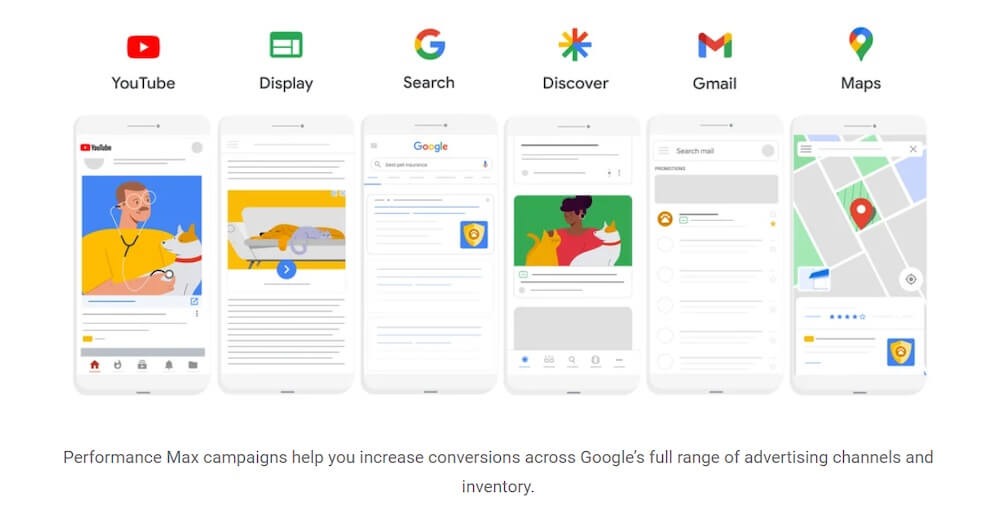
Request a free auditPerformance Max has become a strategic pillar in Google Ads. It combines Search, Shopping, YouTube, Display and Discover into a single campaign and increasingly drives performance across automated and AI-powered placements. And for many advertisers, it is now a primary driver of results.
Google has recently introduced more visibility into how budget is distributed across channels. However, it has not provided direct controls to optimise or manage those channels individually.
Optimisation therefore happens indirectly. Advertisers can influence outcomes through levers such as negative keywords, audience signals, asset structure, customer settings and landing page controls.
This article explains how to use these levers based on observed channel distribution patterns.
Across the accounts analysed, three recurring channel allocation patterns emerged. Each requires a different optimisation focus.
(High existing demand)
In several accounts, the majority of conversions came from Search inventory. This typically occurred where users were already searching with clear transactional intent, including brand and competitor queries.
When this happens, Performance Max behaves primarily as a demand capture engine.
In Search-dominant setups, optimisation is about governance and incrementality, not scale.
(Exploratory or limited search demand)
In categories with lower eligible search volume or longer decision cycles, Performance Max allocated more budget to YouTube, Display, and Discover.
CPA was typically higher, reflecting earlier-stage user intent.
In expansion scenarios, optimisation is about signal strength and creative quality, not restricting channels prematurely.
(High signal density and volume)
In accounts with strong conversion volume and structured data, Performance Max distributed spend efficiently across Search, Display, YouTube, and sometimes Shopping.
This pattern appeared in large e-commerce and high-volume platforms.
In balanced environments, optimisation focuses on structural clarity and value accuracy.
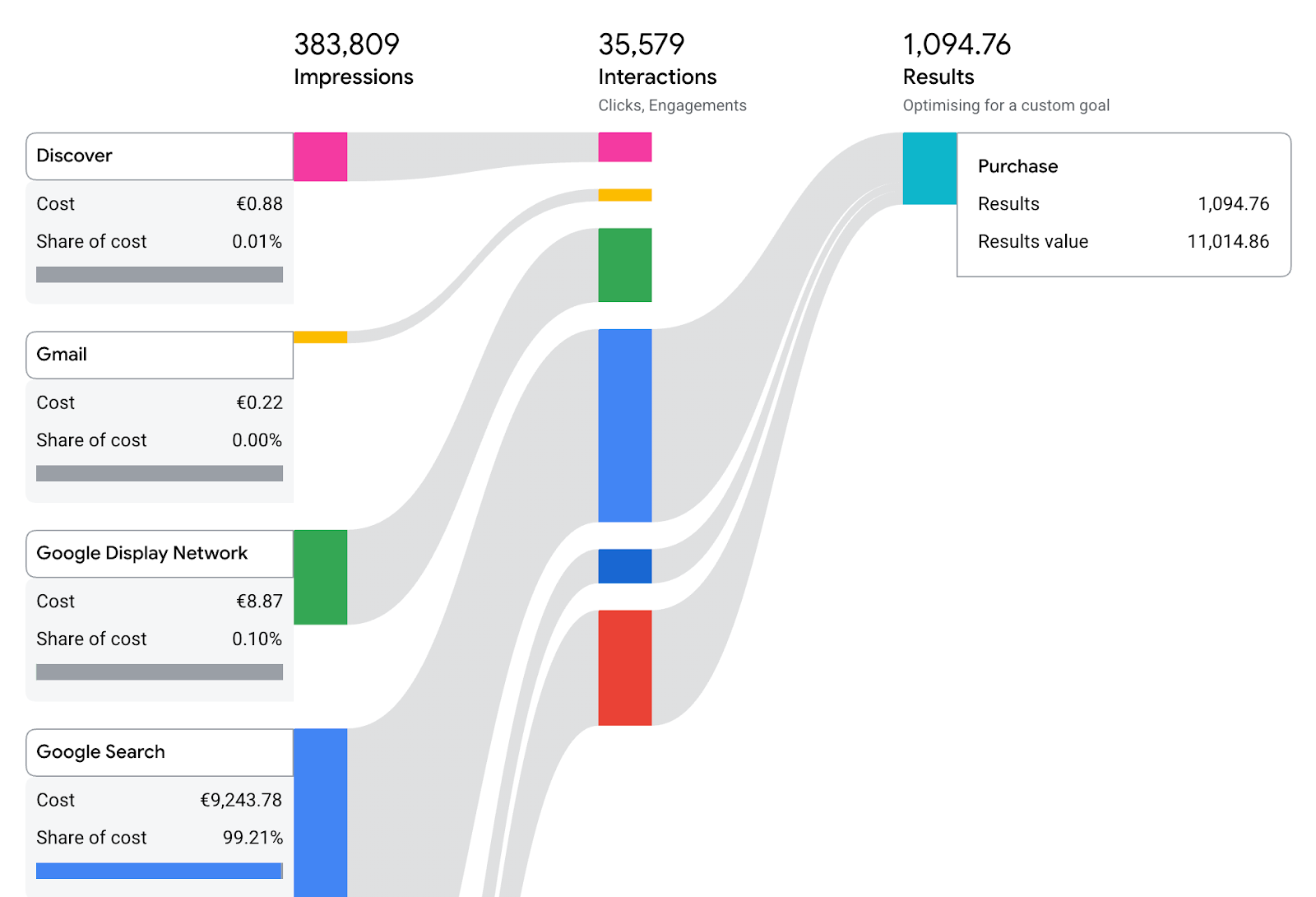
Channel mix is not random.
It reflects:
Instead of asking whether Performance Max “should” use a specific channel, advertisers should ask:
Given my current channel distribution, what signal or structural improvement would most impact efficiency?
Channel reporting makes this diagnosis possible.
Performance Max starts with understanding where the budget is flowing, and why.
From there, optimisation becomes concrete:
Performance Max is no longer a black box.
With the right interpretation of channel distribution, it becomes a system that can be actively guided.


.jpg)
